Why Does My Car Battery Keep Going Flat? 7 Things to Check
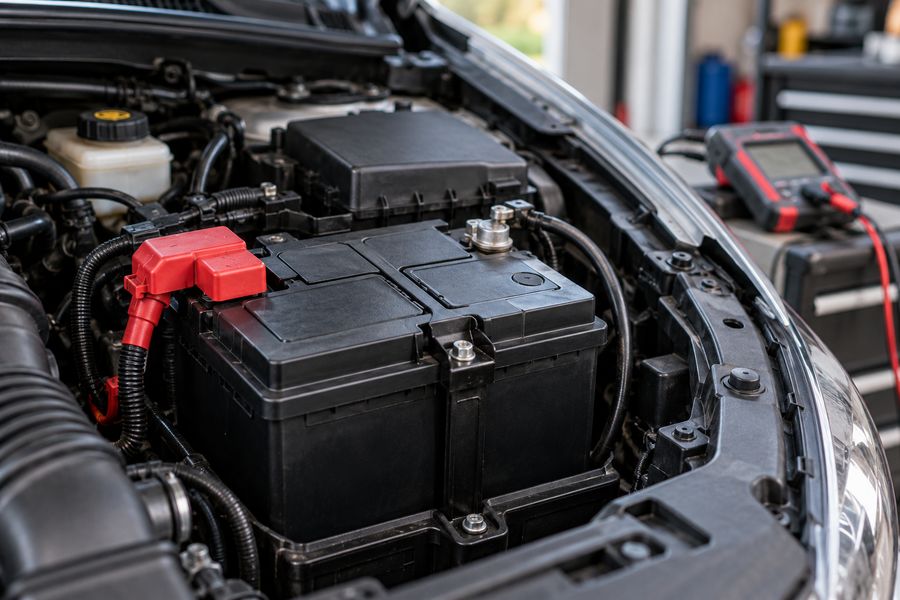
A car battery that keeps going flat is frustrating, especially when the car started normally the day before. But the timing of the problem can tell you more than the fact that it needed a jump-start.
Does it happen after several short journeys, after a weekend parked up, or even after a proper recharge? Those are useful clues when deciding whether you need a replacement car battery or further investigation.
This guide covers the main 12V starter battery in petrol and diesel cars. Hybrid and electric vehicles can use different 12V charging arrangements, so follow the instructions for your specific vehicle.
Start with a simple question: when does it go flat?
Before buying anything, write down the pattern:
- After short journeys: check whether the battery is receiving enough charge between starts.
- After being parked: consider connected accessories, normal standby demand and unwanted electrical drain.
- Soon after charging: check battery condition, whether charging completed and whether a drain remains.
- It seems flat but tests charged: the starting circuit, connections or starter motor may need attention.
These observations help guide testing. They do not identify the fault on their own.
1. Repeated short journeys leave a charging shortfall
Starting uses battery energy. Once the engine is running, the charging system needs to replenish that energy while supporting the vehicle's electrical equipment.
Repeated short trips can leave the battery undercharged, particularly with heating, lights and other equipment in use. A school run followed by a quick shopping trip may provide less charging opportunity than you expect.
What to do: have the battery and charging system assessed. Where appropriate, use a compatible charger according to the vehicle and charger instructions. There is no universal journey length that guarantees a full recharge.
2. Accessories keep drawing power while the car is parked
Dashcams in parking mode, plug-in devices and aftermarket accessories can draw power after the engine stops. Some sockets remain live even when the ignition is off.
An accessory with low consumption can still matter over several days. For illustration, a continuous 0.05A load uses 1.2Ah per day, or 8.4Ah in a week. That calculation does not establish what your car's normal standby current should be.
What to do: check accessory instructions and settings. Switch off or unplug non-essential devices where appropriate, while keeping required security equipment active.
3. A light or electrical fault creates an unwanted drain
A boot light that stays on, a faulty accessory or a vehicle module that fails to enter its normal sleep state can cause unexpected discharge.
Modern vehicles may take time to settle after locking. Opening a door or approaching with a key can wake systems again, which makes a quick current reading difficult to interpret.
What to do: record how long the car stands before the problem occurs and arrange a proper parasitic-drain test. Let a competent technician measure it using the vehicle's procedure and expected values.
4. The battery was never fully recharged
A successful jump-start means the engine has started; it does not establish that the battery has recovered its charge or is healthy.
A short drive after a jump-start can leave you with another non-start the following morning. Charging may also be incomplete if the wrong programme was selected or the charger stopped before completing its cycle.
What to do: use equipment suitable for the battery technology and follow the specified connection points. Our car battery charging guide explains why charging time varies. Stop and seek advice if the battery is damaged, leaking, unusually hot or swollen.
5. The vehicle's charging system needs attention
A charging fault can leave even a new battery short of energy. Depending on the vehicle, diagnosis may involve the alternator, wiring, connections, sensors or battery-management system.
Modern charging systems can vary their voltage during normal operation. A single reading compared with a fixed internet figure is not enough to declare the alternator faulty.
What to do: arrange charging-system testing against the vehicle specification. If the charging warning light appears while driving, follow the handbook and seek assistance promptly.
6. The fitted battery or replacement settings are incorrect
A battery that fits the tray is not necessarily the correct battery. Technology, capacity, starting performance, terminal arrangement and installation requirements all matter.
If the vehicle requires AGM or EFB, switching off start-stop does not make a conventional flooded battery a suitable substitute. Some vehicles also require registration, reset or coding after replacement.
What to do: compare the fitted battery with the vehicle's specified application. Read our AGM vs EFB car battery guide, then check the correct options in our start-stop battery range.
7. The battery has lost performance, or a connection mimics a flat battery
A worn battery may no longer provide reliable starting performance even after charging. However, loose or corroded connections can also contribute to poor starting, and a starter fault can resemble battery trouble.
A voltage reading alone cannot confirm the battery's ability to start the engine.
What to do: use our car battery testing guide as a starting point and arrange an assessment where needed. Connections and the starting circuit should be checked when the symptoms and battery-test results do not agree.
What to tell the technician or battery supplier
A short description of the pattern is more useful than simply saying the battery is flat:
- Vehicle registration, make, model, year and engine details.
- Existing battery model, technology and approximate installation date.
- How long the car was parked before it failed to start.
- Your usual journey lengths and how often you drive.
- Any recently fitted accessories or electrical work.
- Whether the battery received a complete charge and what happened afterwards.
For example: “It starts after charging but struggles after two days parked, and a parking-mode dashcam was fitted last month.” That provides a useful direction for investigation without assuming the dashcam is definitely responsible.
Frequently asked questions
Why does my new car battery keep going flat?
A new battery can still discharge if charging is insufficient or an electrical drain remains. Confirm the correct fitment and any required replacement procedure, then investigate the charging balance rather than repeatedly changing batteries.
Will a bigger battery solve the problem?
Extra capacity does not repair an electrical fault or charging problem. Choose an approved specification for the vehicle and establish why the existing battery is losing charge.
Does needing a jump-start mean the battery needs replacing?
No. The battery may be discharged, deteriorated or affected by another fault. A suitable recharge and assessment help establish the next step.
Find the cause, then choose the right car battery
The most useful approach is to identify the pattern, assess the battery and check for charging or electrical problems where indicated.
If replacement is needed, use our car battery finder and compare the suggested fitment with your vehicle requirements. For help choosing, call Battery2U on 0151 933 4848 with your vehicle and existing battery details.