A complete guide to leisure batteries: All the questions you have in 2025
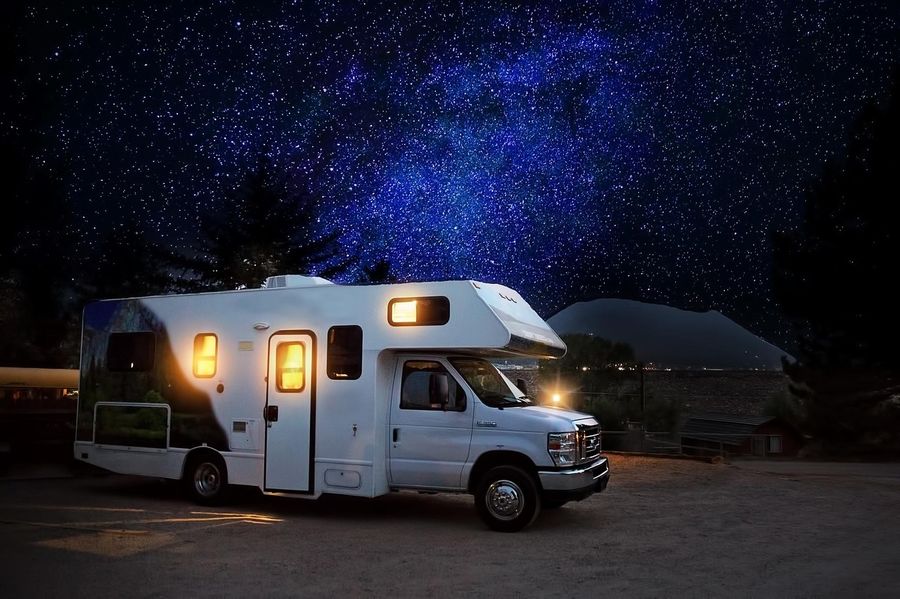
A reliable leisure battery is an essential piece of equipment for those who love weekends in the caravan or spending time touring in a motorhome.
But with so many options available and so much technical jargon to work through, do you know how to make the best choice for your needs?
Here we explain all the questions you might have about leisure batteries in 2025, explaining what they are and how they work, giving guidance on choosing the right type and size for your needs, as well as the best ways to charge, whether that’s a mains hookup, alternator, solar, or smart charger. You’ll also get practical tips on safety and how to get the longest life from your battery.
At Battery 2U, we stock a wide range of trusted leisure batteries with straightforward advice to match you to the right kit the first time.
What is a leisure battery?
A leisure battery is installed in a caravan or motorhome to help power things like appliances when you’re travelling around, as opposed to being hooked up to a mains connector in a camping field.
Leisure batteries give a steady, low current for long periods of time, which makes them different from starter batteries, which deliver a high burst of energy to get engines going.
How do leisure batteries work?
Sometimes also called deep-cycle batteries, they’re built to give you a steady, lower-current supply over time, such as running lights, fridges, and other devices.
Inside a deep-cycle battery, the components are optimised for repeated discharge and recharge:
- Lead-acid types (flooded, AGM, gel) have thicker plates and denser active material. This means they tolerate deeper charges without shedding material. When routinely used, to get the best lifespan, it is best for no more than 50% depth of discharge.
- Lithium iron phosphate (LiFePO4) stores energy differently with ion movement between electrodes. These are lighter, and the voltage is more stable under load. These batteries allow for deeper discharges, roughly 80-90%. Lithium packs also feature a Battery Management System (BMS) to protect against overcharge, overdischarge, and overcurrent.
Types of leisure batteries
There are a few different types of leisure batteries that can be used in motorhomes and caravans; they are:
Lead-acid batteries
Lead-acid batteries are the cheapest option when it comes to leisure batteries, but their proven design still makes them a firm favourite. They do require maintenance over time and need to be kept upright to stop leaks from occurring. Typically, these types of batteries will last between three and five years.
Absorbent Glass Mat (AGM) batteries
Spill-proof, maintenance-free, fast charging, and working well in colder temperatures, AGM batteries seem to have it all. A fibreglass mat holds the sulphuric acid, and their design means they can give high bursts of amps for powering solar panels or even igniting engines. While they’ll typically last you around six years, they do need specific charging voltages and will fail if they’re overcharged.
Gel batteries
Gel batteries combine silica with acid to form a gel-like substance that reduces spill risks while enhancing durability. These leisure batteries are lighter in comparison to AGM batteries, plus they give twice the life cycle if you maintain them properly. Gel batteries are suited to vehicles that need stable power for extended periods, as they’re great at managing slow discharge rates. A typical gel battery can last up to six years, but you’ll pay more for these products, and you need to charge them at a lower voltage.
Lithium Iron Phosphate (LiFePO4/LFP) batteries
LiFePO4 batteries are a third of the weight of lead-acid batteries; what's more, they boast a considerably longer life cycle too, lasting sometimes up to ten times longer. They’re maintenance-free, resist spills and come with built-in electronic controllers for temperature and overcharge protection. The downside is they have a higher initial cost, but as they run for longer, you won’t have to pay for replacements at a later date.
Once you’ve chosen the right battery type, you can browse our full range of caravan leisure batteries suitable for caravans, motorhomes, and marine use.
What size leisure battery do I need?
Picking the right size leisure battery comes down to three things: how much power your appliances use, how long you run them, and how much of a battery’s capacity is truly usable.
Capacity measurements (Watt-hours and amp-hours)
-
Watt-hours (Wh): The Wh rating tells the total power a fully charged battery can provide. To calculate your total watt-hour needs, you need to combine the wattage of all appliances you use and multiply that by the duration, in hours, you plan to use them daily. It’s best to add a 20% margin to the value to guarantee you have enough charge.
-
Amp-hours (Ah): A lot of batteries are rated in Ah, which tells you the number of hours the battery can supply 1 ampere of current. A 100Ah battery can, in theory, supply 5A for 20 hours at 12V. It also indicates the batter’s power capacity. If you’re planning on using your motorhome in places without a fixed power supply, a higher-capacity battery is best.
How to calculate your power needs
-
List each appliance’s wattage (W) and hours of use per day (h).
-
Work out daily energy (Wh) for each: Watts x Hours = Watt-hours (Wh).
-
Add them up for a daily Wh total.
-
Convert to ampere-hours (Ah) for a 12V system: Ah = Wh / 12.
-
Add 20% overhead for inverter/charging losses: Required Ah x 1.2.
-
Adjust for usable capacity:
Example for a weekend caravan
-
Fridge averages 35 W for 12 hours: 35 x 12 = 420 Wh
-
LED lights 10W for 4 hours: 40 W
-
Water pump: 60W for 12 minutes: 12Wh
-
Phones/tables: 30 Wh
Total = 502Wh → 502 / 12 = 42Ah → Add 20% losses = 50Ah/day
Factors that will affect your battery size/usage
-
Solar: In the UK summer, 100 W of solar might add 30-50 Ah each day (depending on conditions), which offsets the battery draw.
-
Charging while driving: A smart DC-DC charger reliably tops up from the alternator.
-
Peukert’s effect: In lead-acid batteries, a high, sustained current will reduce their effective capacity. It’s best to avoid running big 230V appliances for long on small lead-acid banks.
-
Voltage: If you run a 24V system, convert Wh to Ah using 24V instead of 12V, you’ll need fewer Ah for the same Wh.
How long should a leisure battery last?
When you’re thinking about buying leisure batteries, it’s best to think about their life in cycles, rather than just years. Cycles go from full charge to discharge to recharge. How many cycles you’ll actually get depends on how deep you discharge the battery, how it’s charged, temperature, and general care.
Basically, there are a lot of factors which determine how long a leisure battery should last.
Typical lifespan by battery type
|
Battery type
|
Cycles (typical at 50% DoD)
|
Real-world years*
|
Details
|
|
Flooded lead-acid (FLA)
|
200-400
|
2-5
|
Lowest cost; needs venting and topping up
|
|
AGM (Absorbent Glass Mat)
|
300-600
|
3-7
|
Spill-proof, low maintenance; tolerates vibration better than FLA
|
|
Gel
|
500-700
|
4-7
|
Very stable and vibration-resistant, prefers lower charging currents
|
|
Lithium
|
2,000-5,000 (often at 70-80% DoD)
|
8-15
|
Light, fast-charging, deep usable capacity, has a built-in BMS.
|
*Years assume moderate use (typically 50 to 150 cycles per year), correct charging, and sensible temperatures. Heavier use or poor charging will shorten the lifespan of a battery; gentle use with good charging will extend it.
How to charge a leisure battery?
It’s not quite as simple as plug in and charge up; there are many different aspects to charging a leisure battery, including the different types and best practices for optimal performance and extending the battery lifespan.
Another thing to remember is that if you keep your leisure battery in a good state of charge, it’s going to last a whole lot longer than one that is left at a low charge level for long periods of time.
Charging principles
-
Discharge levels: Lead-acid leisure batteries shouldn’t be discharged lower than 50% capacity before recharging; otherwise, you can cause irreversible damage and reduced capacity. Gel batteries can typically be discharged to 80% without damage; LiFePO4 batteries are similar but can sometimes be discharged even further.
-
Avoid complete discharge: Never allow your leisure battery to become completely depleted, as it is virtually impossible to fully charge it again, which causes permanent damage.
-
Recharge quickly: Recharge your batteries as soon as possible after use. Leaving a battery discharged for weeks or months can result in sulphation, which reduces its capacity.
-
Charging rate: Leisure batteries are designed to be recharged relatively slowly. Long, slow charges are better compared with short, fast ones.
Types of leisure battery chargers
There are various ways to charge leisure batteries; here’s a quick breakdown:
Inbuilt chargers
Since around 2010, ‘intelligent’ inbuilt chargers have been introduced, which can give a 90% charge when the vehicle is in use. They’re convenient to use, but the leisure battery should still be removed from time to time to charge with a dedicated external battery charger to get a full charge.
Basic chargers
These have an unregulated voltage that can rise to 15V or more as the battery charges. These aren’t ideal for AGM and gel batteries, as they may cause damage.
Smart, fully automatic chargers
Arguably, the best option, that they can be left permanently connected without causing damage. The best ones will monitor the battery’s temperature and adjust the charging accordingly.
Portable generators
Most portable generators have a 12V DC output for battery charging. Even though they’re quick, they often can’t monitor charge rate or battery voltage.
Car alternator
For motorhomes, driving can top up the leisure battery, but it’s unlikely it will receive a full charge. Caravanners can even charge a second battery in the boot of their car while driving, but never plug a battery directly into the car’s 12V sockets.
Solar-powered chargers
Great for off-grid charging, solar panels are a solid option for charging leisure batteries. Their output must be fed through a regulator or charge controller to prevent overcharging and battery damage.
Common FAQs about leisure batteries
Do leisure batteries charge while driving?
Yes, leisure batteries will charge while driving if your system is wired for it. Traditional car alternators will top up a leisure battery through a split-charge relay (VSR).
Can I use a car battery instead?
It’s not recommended, as car batteries are designed for short bursts to get an engine to start, not for a long, steady discharge. Using a car battery in place of a leisure battery would only shorten its life and result in a poorer performance.
How many leisure batteries can I link together?
It’s possible to link in parallel or in series. If doing this, use an identical make, model, capacity and age. Keep the cable lengths equal, use busbars, and fuse each battery.
What is a split-charge relay?
A device that connects the starter and leisure battery only when the engine is running (or voltage rises), allowing alternator charging without letting the leisure battery drain the starter when parked.
Do I need a special charger?
It’s best to use a smart, multi-stage charger for your leisure battery to ensure optimum charging and prolong its lifespan.
What voltage should a leisure battery be?
At rest, a fully charged leisure battery should read around 12.6 - 12.7 V or higher. Readings that are below 12.4 V show a deeply discharged battery. To get an accurate reading, measure the voltage of a battery once you’ve disconnected all chargers and loads and the battery has been sitting for an hour.
How to tell if a leisure battery is faulty?
-
Won’t hold a charge or drop quickly under small loads.
-
Excessive self-discharge over a few days
-
Stop using it immediately if you spot any building, leaks, heat, or a sulphur smell.
Can you run a caravan without a leisure battery?
If you’re on a mains hook-up, some caravans’ power supplies can feed 12V circuits directly, but most systems will need a battery as a buffer, and some equipment won’t run without one.
Leisure batteries: A roundup
Choosing the right leisure battery is about matching your power needs, budget, and charging setup. Get this right and you’ll reap the benefits with quieter trips, colder fridges, and fewer charging headaches.
With Battery2U, you can make buying a leisure battery simple and easy with our wide range of options and accessories to complete your system. If you need any further help, don’t hesitate to get in touch, and our friendly team will be happy to offer any assistance needed.
Power your next adventure with confidence with our range of trusted brand leisure batteries.